
Emollients are moisturisers which may contain paraffin or other products like shea or cocoa butter, beeswax, lanolin, nut oil or mineral oils and they work by covering the skin with a protective film or barrier which keeps the moisture in.
Regular use of these products over several days, can lead to them soaking into clothing, bedding and bandages/dressings. This residue then dries within the fabric. If you then introduce an ignition or heat source such as
Accidentally dropping a cigarette, lighted match or lighter
Sitting too near to a gas, halogen, or open fire
Catching clothing on a hob when cooking
it can cause a fire to develop, burn intensely and spread rapidly. People who smoke or that have reduced mobility should be especially aware of the risk.
If you need to use emollients, you should continue to do so but ensure you are aware of the fire safety advice to reduce the risk.
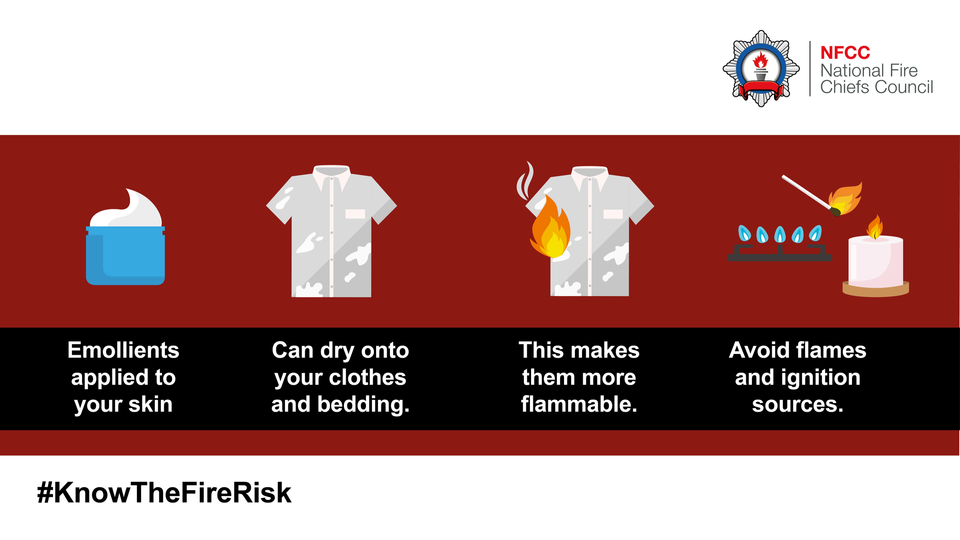
Emollients are an important and effective treatment to prevent or treat skin conditions. However, it’s important for users to be aware of and manage the fire risk associated with these products, particularly when they are absorbed into fabrics. Fabrics with dried-on emollient can become highly flammable.
To reduce the risk, avoid exposure to naked flames, smoking, or other heat sources if fabrics may be contaminated. Wash clothing and bedding regularly to help reduce the build-up of residue, but please note that washing will not completely remove the risk.
Be aware of the risk and take steps to reduce the risk of an emollient fire.
If you smoke and regularly use emollients, you can reduce your risk.
Seek advice on quitting. You can find information and advice on quitting on the NHS Smoke Free website. It’s a good idea to speak with your GP as you are more likely to succeed in quitting with support. The NHS can also provide advice on alternative stop smoking treatments and aids. Nicotine replacement products remove the use of naked flame when lighting a cigarette, or the heat source if you were to drop a cigarette on contaminated fabrics.
If you don’t want to quit or are not ready to quit, never smoke wearing clothes which are contaminated with emollients. Wearing uncontaminated clothes or using a smoking apron may help reduce the risk as it could prevent a dropped match or cigarette coming into contact with your clothing.
Don’t smoke in bed, we never advise this due to the risk of falling asleep when smoking. For emollient users this is a greater risk because bed sheets and night clothes can be contaminated. As with all fabrics which may have emollient residue, we advise these items are washed regularly at the highest temperature on the care instructions. This will not completely remove the risk but can reduce it.
Depending on the person’s needs supervised smoking can also help to reduce the risk.
You can reduce the risk when cooking by making sure you don’t cook when wearing clothes contaminated with emollients when using gas or electric hobs.
Cooking with products with no flame and less or no direct heat will reduce the risk, so it’s safer to cook using a microwave, air fryer or induction hob.
Where possible consider eating meals that have been prepared and easily reheated in a microwave or meals that do not need cooking.
Take care when using candles. You must keep fabrics contaminated with emollients away from naked flames.
Be careful when lighting candles so you do not drop a match or lighter onto clothing or furnishings, ensure you clothes don’t have emollient on them or ask someone else to light them. It’s safer to use LED candles.
Don’t sit too close to open fires, electric bar, gas or halogen heaters. Make you sit at least 1 metre away. Remember that furniture with fabric covers and soft furnishings may also have emollient residue so ensure they are away from the heat source, and you can consider using washable throws over fabric furnishings to reduce the contamination of these. You should regularly wash any throws at the highest temperature on the care instructions.
Wash fabrics such as clothes, bed sheets and furniture throws regularly at the highest temperature indicated on the care instructions to try and remove any residue. This may reduce the risk but will not eliminate it.
Do not dry these fabrics on or in front of heaters.
If using a tumble dryer use a cooler temperature setting and ensure it runs the full cycle including the cool down cycle. Allow items to cool fully before folding to allow any heat to dissipate.
Last updated: Tuesday, 25 August 2026