
- Your safety
- Home safety
- Fire safety in the home
- Smoke alarms
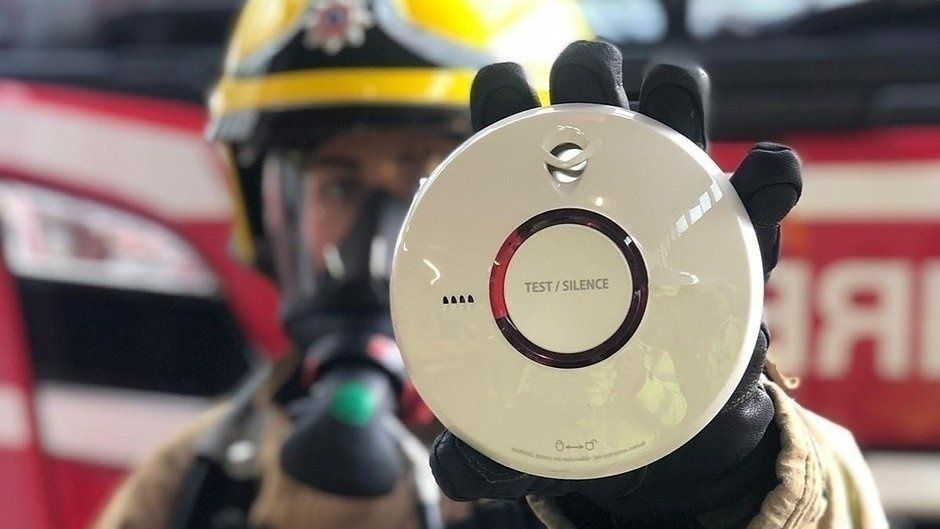
Test your smoke alarm one a week by pressing the test button for 3 seconds. If you cannot reach, use a broom of something similar to help you.
You should have at least one working smoke alarm on every level of your property.
Fit alarms on the ceiling, ideally in the centre of rooms, hallways or landings.
Make sure alarms can be heard in all areas of the home, especially where people sleep.
Avoid fitting alarms in kitchens or bathrooms where steam or cooking fumes may trigger false alarms. Use a heat alarm in the kitchen instead.
Battery-operated alarms are low cost but need the batteries replacing every year – set yourself reminders to change the battery. Replace the full alarm as per the manufacturer’s guidelines.
Hard-wired (mains-powered) smoke alarms should be replaced as per the manufacturer’s guidelines. They should also be tested weekly.
Many hard-wired smoke alarms also have a back up battery that will need to be replaced when they fail. Signs of this include your alarm making frequent little beeps.
If your alarm sounds due to cooking fumes, steam, or dust from DIY activity, ventilate the room and reset it once the air is clear.
If it sounds and you do not know why, get out, stay out and call 999.
If you hear a neighbour’s alarm sounding repeatedly, try to contact them. If you cannot, call 999. Do not attempt to enter the property yourself.
If there is smoke or fire: get out, stay out and call 999.
Specialist alarms provide additional alerts such as vibrating pads and flashing lights.
Place vibrating pads under a pillow or mattress to wake you in an emergency.
Choose products that meet British Standard BS5446-3:2015. Products made to this standard give deaf people assurance of quality smoke alarms designed to meet their needs.
Deaf and hard of hearing people can contact emergency services by text.
Text 999 in an emergency and it will be passed to the police, ambulance, fire rescue or coastguard as appropriate.
You must register your phone beforehand: Register now - emergencySMS
The Smoke and Carbon Monoxide Alarm (Amendment) Regulations 2022 came into force on 1 October 2022. Under these regulations, landlords must:
Install at least one smoke alarm on every floor of the property where there is living accommodation (a requirement in the private rented sector since 2015).
Install a carbon monoxide alarm in any room used as living accommodation that contains a fixed combustion appliance (excluding gas cookers).
Repair or replace smoke and carbon monoxide alarms if they are reported as faulty.
Local authorities enforce these requirements and can issue fines of up to £5,000 if landlords fail to comply.
By taking some simple precautions you can prevent a fire from happening – making everyone in your home a lot safer. During a home fire safety check, we will provide fire safety advice suited to your individual needs and home.
Last updated: Monday, 27 July 2026